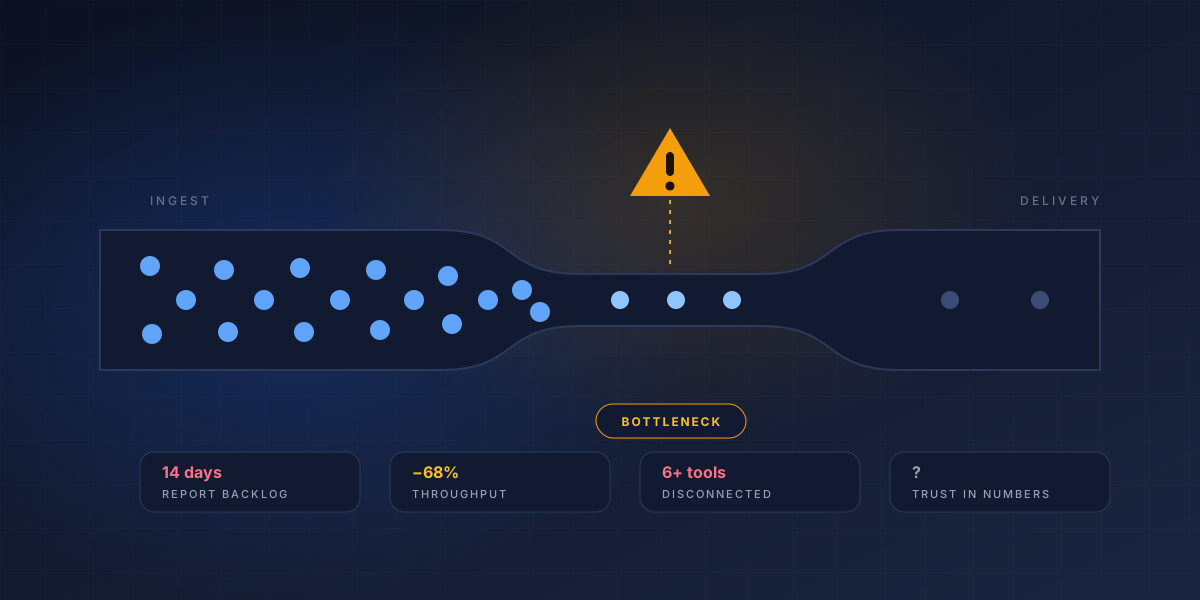
Nobody wakes up one morning and decides to overhaul their data infrastructure for fun. It's usually the result of mounting frustration ? a slow report here, a failed pipeline there, a CEO asking a question that takes three weeks to answer. By the time the pain becomes obvious, it's been building for months or years.
The good news? You don't have to wait for a full-blown crisis to recognize that your data infrastructure needs attention. Here are five warning signs we see most often ? and what to do about them.
1. Your "Real-Time" Dashboard Is Three Hours Behind
In today's business environment, decisions need to happen fast. If your dashboards are showing data from yesterday ? or worse, three hours ago ? you're making decisions based on history, not the present. This lag isn't just annoying; it's a competitive liability.
What's usually happening: Your data pipelines are batch-processed, running on fixed schedules (hourly, nightly, weekly). The infrastructure wasn't designed for the speed your business now demands.
What to do about it: Evaluate a move to streaming or near-real-time data architectures. Technologies like Apache Kafka, Amazon Kinesis, and Azure Event Hubs can transform how quickly data flows from source to insight. A modern enterprise solution can bridge the gap without requiring a complete rip-and-replace.
2. Every New Report Requires an Engineering Ticket
When your analytics team spends most of its time building reports instead of analyzing data, something is fundamentally broken. If business users can't answer their own questions without filing a ticket and waiting two weeks, you have a self-service problem.
What's usually happening: Your data isn't well-documented, your semantic layer is weak or nonexistent, and your BI tool isn't set up for true self-service. The knowledge lives in a few people's heads instead of in the system.
What to do about it: Invest in a proper BI integration strategy that includes data catalogs, documented metric definitions, and a semantic layer that makes data understandable to non-technical users. The goal is to let analysts do analysis, not report-building.
3. Your Data Team Is Stuck in "Firefighting" Mode
Ask your data engineers what they spent last week doing. If the answer is mostly "fixing broken pipelines" and "answering data quality questions" instead of building new capabilities, you're stuck in a reactive cycle that's draining your team's potential.
What's usually happening: Pipelines are fragile, monitoring is inadequate, and data quality issues are caught by business users instead of automated tests. Without proper DevOps practices applied to data, every small change becomes a potential incident.
What to do about it: Implement DataOps practices ? automated testing, monitoring, and alerting. Tools like dbt, Great Expectations, and Monte Carlo can catch issues before they reach your stakeholders. This frees your team to focus on high-value work instead of putting out fires.
4. Different Teams Report Different Numbers for the Same Metric
When the sales team says revenue is $4.2M and the finance team says $3.8M for the same period, trust in data evaporates. Metric inconsistency is one of the most corrosive problems in data organizations ? and it's more common than most leaders realize.
What's usually happening: There's no single source of truth. Different teams are pulling from different systems, applying different definitions, or running different transformation logic. Without governance, "revenue" can mean five different things.
What to do about it: Establish clear data governance with defined metric definitions, data ownership, and a centralized transformation layer. This isn't about bureaucracy ? it's about ensuring that when someone says "revenue," everyone is looking at the same number. BI integration services can help create that single source of truth.
5. Your Cloud Bill Is Growing Faster Than Your Insights
You moved to the cloud to save money and gain flexibility. But now your monthly bill is climbing and you're not entirely sure why. If you can't clearly articulate what you're paying for and whether it's delivering value, you have a cost governance problem.
What's usually happening: Resources aren't optimized, there's no visibility into usage patterns, and teams are provisioning infrastructure without cost awareness. Over-provisioning, idle resources, and inefficient queries can silently inflate your bill by 30-50%.
What to do about it: Implement cloud cost monitoring and optimization. Set up tagging policies, review query patterns, right-size your infrastructure, and establish spending alerts. A structured approach to cloud governance can often reduce costs by 25-40% while improving performance.
"The cost of doing nothing is never zero. Every month you delay modernizing your data infrastructure is a month your competitors get further ahead."
The Hidden Cost of Waiting
Here's what we tell clients: the cost of not modernizing your data infrastructure is often higher than the cost of doing it. Every slow report, every inconsistent metric, every firefighting hour is a cost ? you just don't see it on a balance sheet.
When we work with enterprises on data modernization, we often discover that the friction they've been tolerating has been costing them:
- Lost revenue from delayed insights and missed opportunities
- Wasted talent ? expensive data engineers doing manual, repetitive work
- Bad decisions based on stale or inconsistent data
- Employee frustration that leads to turnover and shadow IT
- Compliance risk from ungoverned data flows
A Practical Path Forward
You don't need to fix everything at once. Here's a prioritized approach:
You do not have to fix everything at once: audit and quantify, fix the single highest-impact problem, modernise in phases, then measure and communicate to build momentum.
- Audit your current state ? Map your data flows, document pain points, and quantify the impact of each issue.
- Pick your highest-impact fix ? What single improvement would deliver the most value? Start there.
- Build incrementally ? Modernize in phases. You don't need a big-bang migration to see results.
- Measure and communicate ? Track improvements and share wins with stakeholders to build momentum.
At Performalytic, we help enterprises assess their data maturity, identify the highest-impact improvements, and execute modernization plans that deliver results without disrupting ongoing operations. Whether you're dealing with slow dashboards, inconsistent metrics, or a data team drowning in tickets, let's talk about what's possible.
See how 4DAlert addresses infrastructure gaps with automated data reconciliation and quality monitoring that scales with your data.