Table of Contents
What is Data-Driven Decision Making?
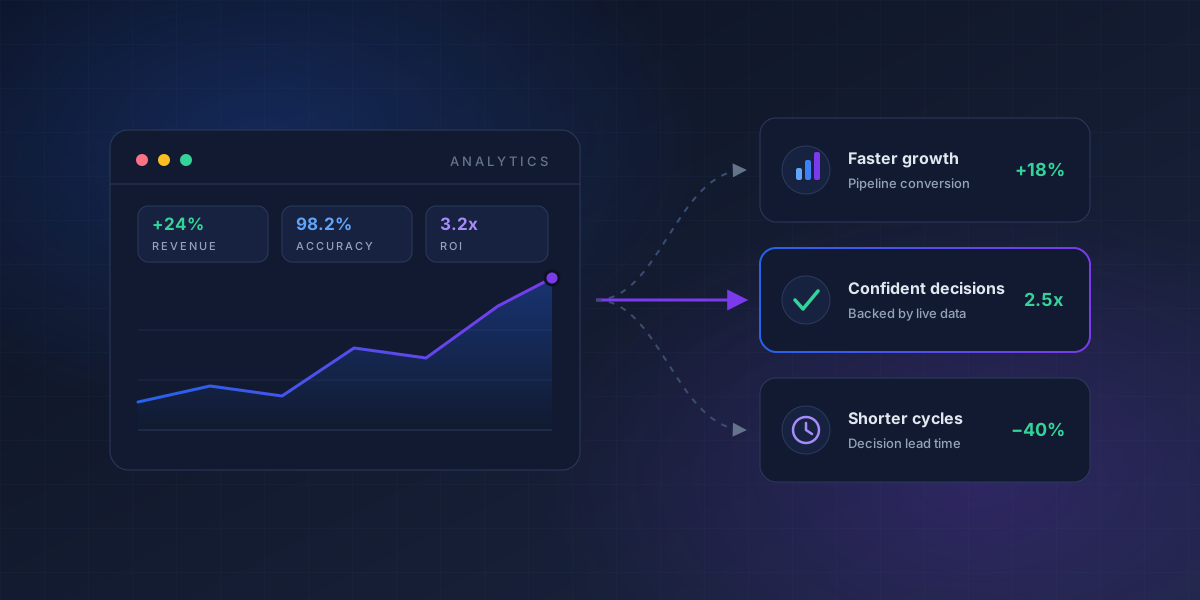
Data-driven decision making (DDDM) is the practice of using data, analytics, and factual evidence to guide business decisions rather than relying solely on intuition or observation. In 2026, organizations that embrace DDDM are 5x more likely to make faster decisions than their competitors and significantly more likely to report above-market revenue growth.
At its core, DDDM transforms raw data into actionable insights. When implemented correctly, it enables organizations to reduce uncertainty, identify opportunities, and optimize outcomes across every business function - from marketing and sales to operations and finance.
Why Data-Driven Decisions Matter More Than Ever
The volume of data generated globally continues to accelerate. According to recent industry research, organizations that leverage data-driven decision making report 5-6% higher productivity and profitability compared to peers who rely on traditional approaches.
Key drivers for the growing importance of DDDM include:
- Competitive pressure: Companies using advanced analytics are outperforming those that don't by widening margins
- Customer expectations: Modern consumers expect personalized, data-informed experiences
- Regulatory complexity: Compliance requirements demand accurate, auditable data trails
- Speed of business: Real-time analytics enables rapid response to market changes
- AI and automation: Machine learning models require clean, well-governed data to deliver value
The DDDM Framework: A 5-Step Process
Effective data-driven decision making follows a structured approach. Here is our proven five-step framework:
The five-step DDDM framework: define the decision first, then data, analysis, communication — and only then decide and act.
Step 1: Define Clear Objectives
Before collecting data, establish what decisions you need to make and what success looks like. Align your data strategy with business outcomes. Ask: "What specific question are we trying to answer?"
Step 2: Collect & Integrate Data
Aggregate data from relevant sources - CRM systems, ERP platforms, web analytics, IoT sensors, and external datasets. This is where business intelligence integration becomes critical, ensuring data flows seamlessly across systems.
Step 3: Analyze & Model
Apply analytical techniques ranging from descriptive statistics to advanced predictive models. Leverage AI and machine learning to uncover patterns and generate forecasts that inform decision-making.
Step 4: Visualize & Communicate
Transform complex findings into clear, actionable visualizations. Dashboards and reports should tell a story that stakeholders at every level can understand and act upon.
Step 5: Decide & Iterate
Make decisions based on evidence, measure outcomes, and refine your approach. DDDM is an iterative cycle - continuous improvement is built into the process.
"Without a clear data strategy, even the most sophisticated analytics tools will fail to deliver business value. The key is starting with the question, not the data."
Essential Tools & Technologies
Modern data-driven organizations leverage a stack of complementary technologies:
- Data Warehousing & Lakes: Snowflake, Amazon Redshift, Google BigQuery, Azure Synapse
- BI & Visualization: Power BI, Tableau, Looker, ThoughtSpot
- Data Integration: Fivetran, Airbyte, Apache Kafka, Talend
- AI & ML Platforms: Dataiku, DataRobot, AWS SageMaker, Azure ML
- Data Governance: Collibra, Alation, Atlan, Monte Carlo
- Orchestration: Apache Airflow, dbt, Prefect, Dagster
Building a Data-Driven Culture
Technology alone is not enough. A truly data-driven organization requires cultural transformation:
- Executive sponsorship: Leadership must model data-informed decision making
- Data literacy programs: Invest in training so all employees can interpret and question data
- Democratized access: Make data accessible to those who need it, with appropriate governance
- Celebrate curiosity: Encourage teams to ask "what does the data say?" as a default reflex
- Measure what matters: Align KPIs with strategic objectives, not just what's easy to track
Overcoming Common Challenges
Even sophisticated organizations face obstacles in their DDDM journey. Common challenges include:
- Data silos: Fragmented data across departments prevents a single source of truth. Our BI integration services help break down these barriers.
- Data quality issues: Inaccurate or inconsistent data undermines trust. Implement robust data quality frameworks and observability tools.
- Skill gaps: Bridge the gap between technical data teams and business stakeholders through cross-functional collaboration.
- Tool sprawl: Too many tools without integration creates confusion. Focus on a consolidated, interoperable stack.
The Future of Data-Driven Decisions
Looking ahead, several trends will shape DDDM in 2026 and beyond:
- Augmented analytics: AI-powered tools that automatically surface insights and recommendations
- Decision intelligence: A discipline that combines data science with decision theory and AI
- Real-time decisioning: Streaming data architectures enabling millisecond-level decisions
- Responsible AI: Ethical frameworks ensuring data-driven decisions are fair, transparent, and auditable
At Performalytic, we help organizations build the data foundations, analytics capabilities, and cultural practices needed to thrive in this data-driven era. Contact our team to learn how we can accelerate your data journey.
Discover how 4DAlert powers data-driven decisions with automated reconciliation and real-time quality monitoring.