The convergence of artificial intelligence and business intelligence - often called AI-powered BI or augmented analytics - is fundamentally changing how organizations interact with data. In 2026, AI is no longer a futuristic add-on to BI platforms; it's a core capability that's reshaping the entire analytics landscape.
Organizations that combine AI with BI are seeing dramatic improvements in speed to insight, data accuracy, and the breadth of questions they can answer. Here are the key trends driving this transformation.
1. Natural Language Querying (NLQ)
One of the most accessible AI-powered BI features is natural language querying. Instead of writing complex SQL or learning a BI tool's interface, users can simply ask questions in plain English: "What were our top-selling products last quarter?" or "Show me revenue by region for the past 12 months."
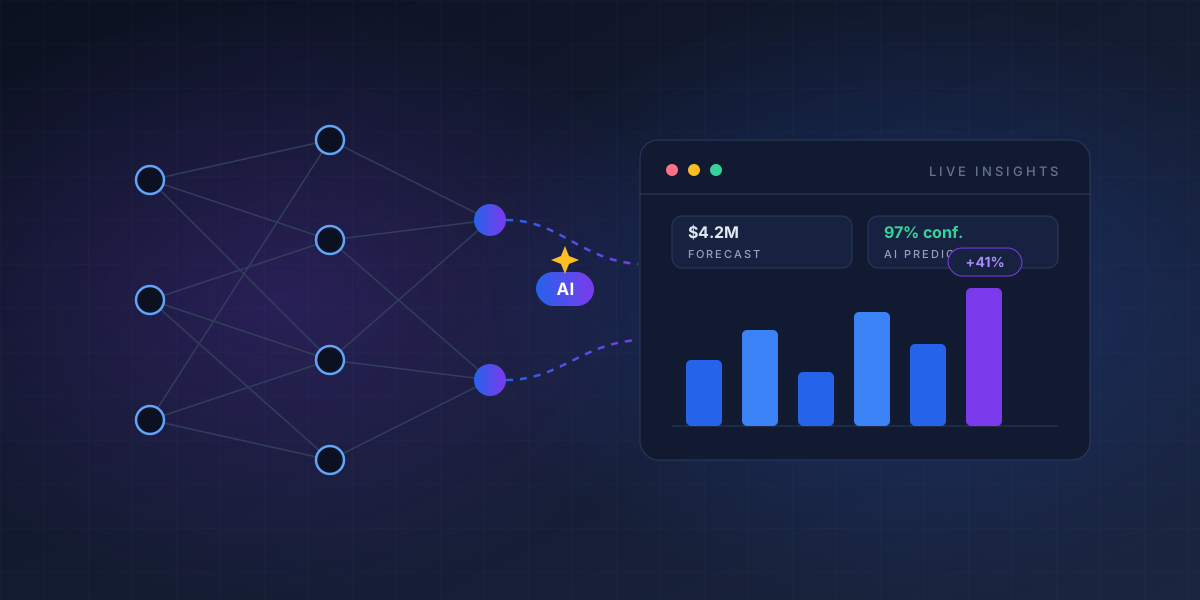
AI sits on top of the same BI pipeline: sources are prepared and modelled once, then natural-language query, prediction and dashboards all read one governed layer.
Modern BI platforms like Power BI, Tableau, and ThoughtSpot now include NLQ capabilities that interpret user intent, map it to the underlying data model, and return relevant visualizations in seconds. This democratizes data access, enabling non-technical stakeholders to explore data independently.
2. Automated Data Preparation
Data preparation has historically consumed 60-80% of a data professional's time. AI-powered automated data preparation tools are changing this dramatically. Machine learning algorithms can now:
- Automatically detect and fix data quality issues
- Suggest data type conversions and formatting changes
- Identify and recommend data relationships and joins
- Generate data transformation pipelines with minimal human input
At Performalytic, our BI integration services leverage these AI capabilities to accelerate data pipeline development and ensure data quality from source to dashboard.
3. Predictive & Prescriptive Analytics
Traditional BI answers "what happened?" Predictive analytics answers "what will happen?" and prescriptive analytics answers "what should we do about it?" AI is making all three layers more powerful:
- Predictive models built and deployed directly within BI platforms
- Automated forecasting using time-series analysis and deep learning
- Recommendation engines that suggest optimal business actions
- Anomaly detection that surfaces unexpected patterns automatically
4. Augmented Data Discovery
AI-powered BI tools can automatically explore datasets and surface insights that humans might miss. These systems identify correlations, outliers, clusters, and trends - then present them in natural language narratives alongside visualizations. This "augmented analytics" approach helps analysts work faster and ensures that valuable insights don't remain hidden in vast datasets.
5. Embedded AI & Real-Time Intelligence
The line between operational systems and analytical systems continues to blur. AI-powered BI is increasingly embedded directly into business workflows:
- Real-time dashboards that update as streaming data arrives
- AI alerts triggered by specific data conditions or anomalies
- Automated decision engines that act on analytical insights without human intervention
This shift toward real-time, embedded intelligence is particularly impactful in industries like finance, healthcare, and manufacturing, where enterprise solution development must balance speed with governance.
"AI doesn't replace the analyst - it augments them. The best insights still come from human curiosity paired with machine scale."
Getting Started with AI-Powered BI
Ready to bring AI into your BI strategy? Here are practical steps to get started:
- Audit your current BI stack: Identify where AI capabilities can add the most value
- Start with a use case: Pick one high-impact area (like automated forecasting or anomaly detection)
- Invest in data quality: AI models are only as good as the data they're trained on
- Build cross-functional teams: Combine data engineers, analysts, and business stakeholders
At Performalytic, we help organizations at every stage of their AI-powered BI journey. From initial strategy to full implementation, our team of 800+ experts brings deep experience across the advanced analytics and AI landscape.
Explore how 4DAlert integrates AI-powered analytics to deliver real-time business intelligence across your data stack.